Pat Hackett
The Andy Warhol DiariesPat Hackett was Andy Warhol’s confidante, collaborator, daily telephone interlocutor, and the editor who transformed his spoken accounts into The Andy Warhol Diaries. Her significance lies not only in preserving the record but in helping create its form: she established a weekday routine with Warhol, transcribed his recollections, gathered the receipts behind his expense reports, and later selected and shaped the material for publication. The resulting diary carries his account of daily life, but its surviving voice also bears the marks of Hackett’s editorial decisions and their long friendship.
Identity and collaboration
Hackett was one of Warhol’s closest confidantes for many years. Beyond editing the Diaries, she co-authored Popism and Andy Warhol’s Party Book with him and co-wrote the screenplay for Bad. Their collaboration therefore extended across diary-making, books, and film; the Diaries’ production was one sustained part of a wider working relationship, not a task performed at a distance by an outside transcriber.
Before the daily diary began, Hackett had kept a general, sketchy log of Factory business. She listed office visitors and the main events of the previous night, sometimes asking different attendees for their versions of a dinner or opening. The record tracked what had happened, who had been present, and what Warhol had spent in cash. It did not yet aim to convey his personal perspective: often, his contribution amounted only to reporting his expenses.
Building the daily record
In 1976, after filming Bad, Hackett told Warhol she no longer wanted to work at the office, though she would continue working with him on Popism. Warhol asked her to keep the log and itemize his personal expenses, describing it as a five-minute-a-day job. Hackett objected that calling office staff every day to reconstruct events would effectively keep her at the office. They agreed instead that Warhol would provide the daily account himself. With that change, the log became a personal narrative.
In the fall of 1976, they established a weekday morning telephone routine. Its stated tasks were practical: record what Warhol had done and where he had gone the day and night before, and itemize the cash business expenses incurred along the way. The record also served the purpose of satisfying tax auditors, a concern sharpened by the IRS’s continuing scrutiny of Warhol’s business after a major audit in 1972. Yet the daily accounting grew into something broader: Hackett described it as a diary, through which Warhol examined life while retaining his close attention to even minor expenses.
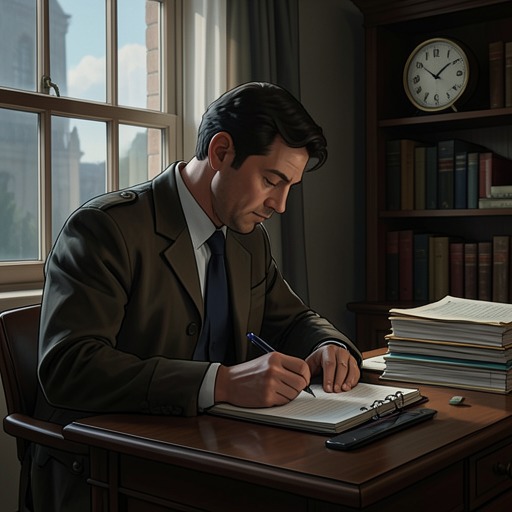
The routine had a particular rhythm. Hackett called at about nine in the morning, no later than 9:30. Their conversations began with ordinary talk and Warhol’s questions about matters ranging from breakfast and television to cleaning a can opener. Then he recounted the previous day and night and gave his expenses. Though Warhol called it Hackett’s five-minute job, a session could last one or two hours. She took extensive notes on a legal pad and, immediately after hanging up, typed the entry while his intonations were fresh in her mind.
The record was assembled through more than the morning calls. Every other week or so, Hackett brought the typed pages to the office and attached the loose cab and restaurant receipts Warhol had left for her, matching them to amounts already reported by phone. On weekends they did not make diary entries, even if they spoke or met; on Monday, Warhol recounted the activities of Friday, Saturday, and Sunday in a triple session. When he traveled, he might call from away, read notes scrawled on hotel stationery after returning, or give Hackett a cassette he had recorded. When Hackett traveled, they varied the arrangement, sometimes having Warhol read his notes to her over the phone. Their method changed with circumstance, but Hackett said no day was left without a diary account.
Friendship and editorial shaping
The diary calls were only one part of their contact. When they worked on a project such as Popism, they could speak several times during the day and evening; as friends, they also called whenever something amused or angered them. Hackett remembered arguing and laughing as characteristic of their conversations. Warhol sometimes added to or corrected an account after the regular call and instructed her to include the new detail. The text thus emerged from an ongoing exchange, rather than from a single, sealed act of recollection.
For publication, Hackett condensed the original 20,000 manuscript pages into one volume. She cut whole days, sometimes entire weeks, and often only portions of a day; an entry covering a night with five parties might retain just one. She also reduced the number of names, favoring people Warhol had spoken with or discussed in detail over exhaustive social lists. These omissions were not marked in the text. Hackett’s stated aim was to give the book narrative flow and avoid overwhelming readers with names that might mean little to them. The published diary is consequently a selected record, not a complete day-by-day transcript of everything Warhol recounted.
Her editorial approach also sought to preserve the uneven, intimate quality of Warhol’s voice. She kept explanatory insertions to a minimum, reasoning that frequent clarifications would interrupt his personal tone and distance the reader. Some relationships therefore remain difficult to place without effort; Hackett regarded that uncertainty as part of reading a diary, in which life unfolds with occasional confusion. She advised reading the entries in sequence. She also removed the interpersonal details of Warhol’s and her own discourse when they would make sense only to them. Where personal references remained, she recast herself in the third person as PH, intending the reader to occupy the position of the person listening on the other end of the morning call.
The final interruption
The routine’s intimacy became especially visible in its final days. In February 1987, Warhol was experiencing gallbladder pain, though he did not tell the Diary about the first episode. After taking medication early one morning, he slept through Hackett’s nine o’clock call. When he did not answer, she became frightened because this had never happened before. She called on the other line; Aurora, in the kitchen, answered, and Hackett asked her to go upstairs and shake Warhol awake. He later said he wished she had let him sleep.
Hackett’s account of what followed includes information Warhol had withheld from the diary call. After the pain returned, he saw his regular doctor and told Hackett he was going to the hospital for an operation, though fear kept him from saying those words directly. He was admitted to New York Hospital on February 20, underwent gallbladder surgery the next day, and initially appeared to recover: he watched television and called friends. He died early Sunday morning. The interruption of the familiar call-and-transcription routine marks a boundary in the book’s method: Hackett could preserve Warhol’s narrated experience, but the account also depended on what he chose to tell her and, at the end, on what she learned outside his narration.